
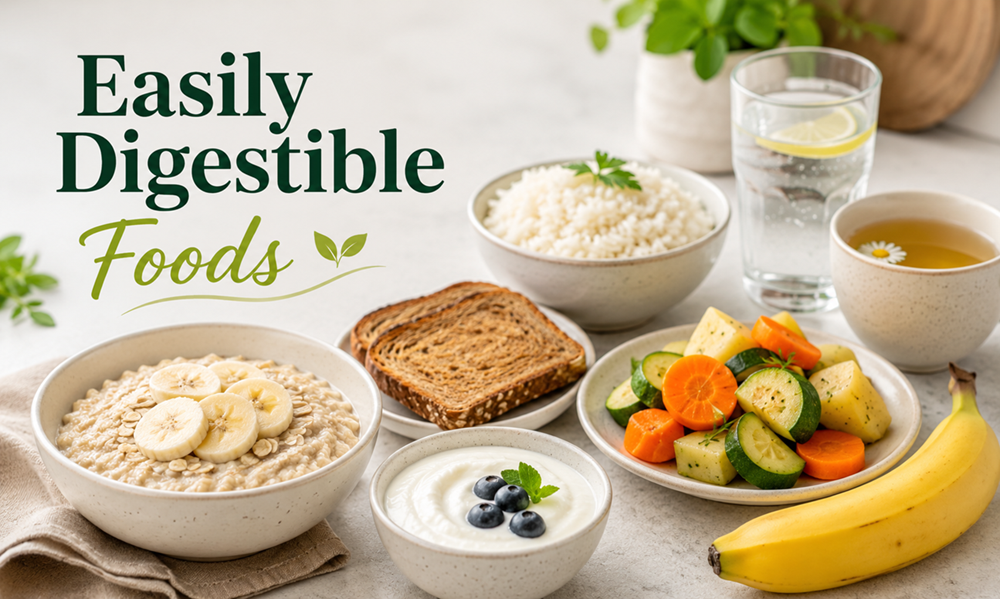
The easiest foods to tolerate are usually soft, simply prepared, lower in fat, and sometimes lower in fiber. But the best choice depends on why your stomach is upset. This 2026 U.S. guide separates short-term gentle foods from the foods that make sense for diarrhea, nausea, reflux, IBS, gastroparesis, and recovery after illness.
| Important: An “easy-to-digest” diet is usually a temporary symptom-management strategy, not a complete long-term eating plan. If you cannot keep food or fluids down, have severe abdominal pain, blood in stool or vomit, unexplained weight loss, persistent diarrhea, trouble swallowing, or signs of dehydration, seek medical care. |
When your digestive system feels unsettled, choosing easily digestible foods may be more useful than simply asking which foods are generally considered healthy. A bowl of raw kale, lentils, nuts, and seeds can be nutritious, but it may be a terrible choice during a day of nausea, diarrhea, early fullness, or a sensitive stomach. In those moments, texture, fat content, fiber type, portion size, and preparation method can matter as much as the food itself.
Foods that are often easier to tolerate tend to require less chewing, contain less insoluble fiber, have less added fat, and arrive in smaller portions. Cooking, peeling, mashing, blending, or pureeing can also reduce the amount of mechanical work your digestive tract has to do.
That does not mean everyone should live on white rice and toast. Fiber, healthy fats, fruits, vegetables, legumes, nuts, and whole grains are important parts of many healthy diets. The goal is to match the food to the situation, use gentler choices when symptoms are active, and broaden the diet again when your body is ready.
Key Takeaways
- Common easily digestible foods include white rice, toast, crackers, oatmeal, bananas, applesauce, potatoes without skin, cooked carrots, eggs, lean chicken, fish, yogurt if tolerated, broth, and smooth soups.
- Soft texture and simple preparation often improve tolerance. Boiling, baking, steaming, poaching, mashing, and blending are usually gentler than frying or heavily seasoning food.
- Low-fiber foods may be useful temporarily during diarrhea, nausea, gastroparesis, or certain post-surgery diets, but routinely cutting fiber can worsen constipation and reduce diet quality.
- Low-fat meals often feel easier because fat can slow stomach emptying and make fullness, nausea, or reflux worse in some people.
- The traditional BRAT foods, bananas, rice, applesauce, and toast, can be useful components of a gentle diet, but they are too nutritionally limited to be the only foods you eat for an extended period.
- For IBS, the problem may be fermentable carbohydrates rather than digestion in general. Foods that are gentle for one person can still trigger gas or bowel symptoms in another.
- For gastroparesis, clinicians may specifically recommend small meals that are low in fat and fiber, with soft, well-cooked, or blended foods when symptoms are more severe.
- Persistent digestive symptoms deserve a diagnosis. Repeatedly restricting your diet without knowing the cause can lead to inadequate calories, protein, vitamins, minerals, or fiber.
What Makes a Food Easy to Digest?
There is no official universal medical category called “easily digestible foods.” Digestion is a multistep process involving chewing, stomach mixing, acid and enzymes, bile, pancreatic enzymes, movement through the intestines, nutrient absorption, and fermentation by gut bacteria. A food can be easy at one stage and troublesome at another.
In practical terms, a food often feels easier when it is soft, lower in fat, modest in portion size, and lower in coarse or insoluble fiber. Cooking breaks down plant cell walls and softens texture. Peeling fruits and vegetables removes some of the tougher fiber. Grinding or blending reduces particle size before the food reaches the stomach.
Individual tolerance still matters. Milk may be easy for someone who digests lactose normally but cause cramps and diarrhea in someone with lactose intolerance. Wheat toast may be gentle for many people but inappropriate for someone with celiac disease. Applesauce may work during an upset stomach yet trigger symptoms in some people with IBS because of fermentable carbohydrates.
A Quick List of 30 Easily Digestible Foods
| Food | Why it may be gentle | Best preparation |
| White rice | Low in fiber and bland | Plain, soft-cooked |
| White toast | Low in fiber and easy to portion | Dry or lightly topped |
| Plain crackers | Simple starch and low moisture | Choose non-spicy varieties |
| Cream of wheat | Soft, refined cereal | Cook until smooth |
| Oatmeal | Soft texture with soluble fiber | Cook thoroughly; use smaller portions if bloating |
| White pasta | Low-fiber starch | Soft-cooked with a light sauce |
| Potatoes | Soft starch when peeled | Boiled, baked, or mashed without heavy fat |
| Sweet potatoes | Soft when cooked and nutrient-dense | Peel and mash if needed |
| Bananas | Soft and easy to chew | Ripe, plain |
| Applesauce | Cooked and pureed fruit | Unsweetened if possible |
| Canned peaches | Soft, low-residue texture | Choose fruit packed in juice |
| Melon | Soft, water-rich fruit | Small portions, no seeds |
| Cooked carrots | Fiber softens with cooking | Steam or boil until tender |
| Zucchini | Soft vegetable when peeled and cooked | Cook thoroughly |
| Winter squash | Soft and mashable | Roast or steam and puree |
| Green beans | Can be tender when well cooked | Cook until soft |
| Eggs | High-quality protein with little fiber | Poached, scrambled, or boiled |
| Skinless chicken | Lean protein | Poached, baked, or shredded |
| Turkey | Lean protein | Baked or ground, not fried |
| White fish | Lean, tender protein | Baked, steamed, or poached |
| Salmon | Soft protein but higher in fat | Small portion if fat is tolerated |
| Tofu | Soft plant protein | Plain, baked, or gently cooked |
| Greek yogurt | Soft protein and fermented dairy | Plain, low-fat, lactose-free if needed |
| Cottage cheese | Soft protein | Low-fat if high fat worsens symptoms |
| Broth | Fluid and electrolytes with minimal solid digestion | Low-fat, not overly spicy |
| Chicken noodle soup | Soft starch plus lean protein | Use tender noodles and modest fat |
| Pureed vegetable soup | Small particle size | Choose lower-fat, non-spicy versions |
| Smooth nut butter | No coarse nut pieces | Thin layer; limit if fat worsens symptoms |
| Gelatin | Very low residue | Useful short term, not nutritionally complete |
| Oral nutrition shake | Liquid calories and protein | Use medically appropriate products if solid food is difficult |
Which Carbohydrates Are Usually Easiest to Digest?
Refined grains are often easier during an acute digestive flare because much of the bran and germ has been removed. That makes white rice, white bread, refined pasta, crackers, cream of wheat, and similar foods lower in fiber than their whole-grain versions.
This can be useful temporarily when diarrhea is active, when a doctor has recommended a low-fiber diet, or when large amounts of fiber worsen nausea or early fullness. White rice is especially versatile because it is bland, low in fat, and easy to pair with lean protein.
Oatmeal is a slightly different case. It contains soluble fiber, which absorbs water and can help some people with bowel regularity. However, even oatmeal may cause fullness or gas in a person who is highly sensitive to fiber. Cooking it thoroughly and starting with a small portion can improve tolerance.
Which Fruits Are Gentle on the Stomach?
Ripe bananas are one of the most common gentle fruits because they are soft, require little chewing, and provide potassium. Applesauce is often easier than a raw apple because cooking and pureeing remove much of the mechanical work and the skin is absent.
Canned or soft fruits such as peaches, pears, or fruit cups can be easier than raw fruit with skins, seeds, or fibrous membranes. Melons are soft and water-rich, although large portions may still cause bloating in sensitive people.
Fruit tolerance depends on the condition. Some people with IBS react to certain fruits because of fructose, sorbitol, or other fermentable carbohydrates. Someone with diarrhea may tolerate applesauce while another person with IBS may find it worsens gas. Use your symptom pattern rather than assuming all soft fruit is universally safe.
Which Vegetables Are Easier to Digest?
Raw vegetables can be harder to tolerate during digestive symptoms because they retain more structure and often contain more coarse insoluble fiber. Cooking makes vegetables softer and can reduce the amount of chewing and mechanical breakdown required.
Good starting options include cooked carrots, peeled zucchini, winter squash, pumpkin, potatoes without skin, green beans, and well-cooked spinach. The softer the texture, the easier these foods are for many people to manage during a flare.
Cruciferous vegetables such as broccoli, cauliflower, Brussels sprouts, and cabbage are nutritious, but they can create more gas because gut bacteria ferment certain carbohydrates. Beans, onions, and garlic can do the same. These foods are not unhealthy. They may simply be poor choices on a day when bloating or intestinal gas is already severe.
Which Proteins Are Easiest on Digestion?
Lean, tender protein sources are usually easier than fatty, fried, heavily processed, or very tough meats. Eggs are a useful option because they provide complete protein without fiber and can be cooked to a soft texture.
Skinless chicken, turkey, white fish, and tofu are also common choices. Shredding, poaching, steaming, or slow cooking can make meat easier to chew and swallow. Ground poultry may be easier than a large steak or pork chop.
Fat content matters. Sausage, bacon, fried chicken, heavily marbled beef, and creamy meat dishes may worsen nausea, reflux, or early fullness because high-fat meals can slow gastric emptying. A small portion of salmon may still be well tolerated, but someone with severe gastroparesis symptoms may need a lower-fat choice.
Are Dairy Foods Easy to Digest?
Dairy is highly individual. Yogurt, cottage cheese, and milk are soft and provide protein, calcium, and other nutrients, but lactose can cause gas, bloating, abdominal pain, and diarrhea in people who do not digest it well.
If dairy seems to trigger symptoms, lactose-free milk or lactose-free yogurt may be easier. Hard cheeses contain less lactose than milk but can be higher in fat, which may matter if your main problem is slow stomach emptying or reflux.
After some gastrointestinal infections, temporary lactose intolerance can occur because the small-intestinal lining needs time to recover. If milk suddenly bothers you during recovery, that does not always mean you will have permanent lactose intolerance.
What Are the Best Easily Digestible Foods for an Upset Stomach?
When nausea, mild stomach discomfort, or poor appetite is the main problem, smaller portions and simple foods usually work better than a large mixed meal.
- Dry toast or plain crackers.
- White rice.
- Plain oatmeal or cream of wheat.
- Mashed potatoes without heavy butter or cream.
- Broth or a light soup.
- Scrambled or poached eggs.
- Plain noodles.
- Small amounts of baked chicken or white fish once appetite improves.
Eat slowly and stop before you feel overly full. Drinking very large amounts with a meal can increase distention in some people, so frequent small sips may feel better.
What Should You Eat When You Have Diarrhea?
The first priority with diarrhea is replacing fluids and electrolytes, not starving the digestive tract. Water, broth, and oral rehydration solutions may be useful depending on severity. As appetite returns, soft foods such as rice, bananas, potatoes, toast, noodles, lean meat, and well-cooked vegetables are reasonable options.
The National Institute of Diabetes and Digestive and Kidney Diseases does not recommend routine fasting or a highly restricted diet for most cases of viral gastroenteritis. Once appetite returns, people can generally resume a normal diet even if some diarrhea remains.
Certain foods and drinks can make diarrhea worse for some people, including alcohol, caffeine, large amounts of simple sugars, sugar alcohols, high-fat foods, and lactose-containing dairy when temporary lactose intolerance is present.
For current U.S. guidance on eating during a stomach infection, see the NIDDK viral gastroenteritis diet guidance.
Is the BRAT Diet Still Recommended?
BRAT stands for bananas, rice, applesauce, and toast. These foods remain perfectly reasonable examples of bland, lower-fat, relatively low-fiber foods that many people tolerate during nausea or diarrhea.
What has changed is the idea that a sick person should eat only those four foods for several days. The BRAT diet is too limited in protein, calories, healthy fats, and many micronutrients to serve as a complete recovery diet.
A better modern approach is to use BRAT foods as part of a broader gentle menu. Add eggs, soup, potatoes, yogurt if tolerated, cooked vegetables, lean chicken, fish, or other foods as appetite and tolerance return.
What Are Easily Digestible Foods for Nausea?
Nausea often improves with smaller, more frequent meals rather than three large meals. Bland starches such as crackers, toast, rice, and noodles are common starting choices because they have little odor and are easy to portion.
Cold or room-temperature foods may be easier if cooking smells worsen nausea. A chilled yogurt, fruit puree, simple sandwich, or cold pasta can be less aromatic than a hot meal.
High-fat foods can sit in the stomach longer and may worsen nausea. Fried foods, rich sauces, heavy cream, greasy takeout, and large portions are often harder to tolerate until symptoms settle.
What Foods Are Easy to Digest With Acid Reflux?
For reflux, the key issue is not simply how fast the stomach digests a food. Large meals, high-fat foods, alcohol, and lying down after eating can make reflux more likely. Some people also identify personal triggers such as tomato, citrus, chocolate, peppermint, coffee, or spicy foods.
Gentler reflux-friendly meals often include oatmeal, rice, potatoes, lean poultry, fish, eggs, cooked vegetables, bananas, melon, or low-fat yogurt if dairy is tolerated.
Meal size may matter as much as the ingredients. A huge bowl of “safe” food can still increase pressure in the stomach and promote reflux.
What Foods Are Easy to Digest With Gastroparesis?
Gastroparesis requires more specific dietary guidance because the stomach empties food too slowly. In this condition, high-fat and high-fiber foods can remain in the stomach longer and worsen fullness, nausea, vomiting, or bloating.
NIDDK recommends strategies that may include five or six small meals instead of two or three large meals, low-fat and low-fiber foods, thorough chewing, soft well-cooked foods, and adequate liquids. When symptoms are more severe, clinicians may recommend foods processed into very small particles or blended into a smooth consistency.
Examples can include cream of wheat, white rice, mashed potatoes, eggs, low-fat yogurt, tender fish, finely shredded chicken, pureed soup, low-fat broth, fruit or vegetable juice without fiber, and medically appropriate liquid nutrition.
For detailed U.S. guidance, see the NIDDK gastroparesis eating and nutrition resource.
What Foods Are Easy to Digest With IBS?
IBS is different because a food can be mechanically easy to digest and still create gas or bowel symptoms. Certain fermentable carbohydrates, known as FODMAPs, can draw water into the intestine and be rapidly fermented by gut bacteria.
For example, applesauce has a soft texture but can be high in fermentable carbohydrates for some people with IBS. Wheat toast may be bland but can be a problem for someone who is sensitive to wheat fructans. Milk may be soft but troublesome if lactose is not well absorbed.
A low-FODMAP diet can help some people with IBS, but it is not meant to be a permanent highly restrictive diet. The usual clinical approach includes a temporary restriction phase followed by systematic reintroduction to identify individual triggers, ideally with a dietitian.
What Foods Are Easiest After Vomiting?
After vomiting, hydration comes first. Small, frequent sips are usually easier than drinking a large glass quickly. If clear fluids stay down, you can gradually add bland starches and then more complete meals.
Start with foods such as crackers, toast, rice, bananas, applesauce, potatoes, or soup. Add eggs, yogurt if tolerated, and lean protein as your appetite returns.
If you repeatedly vomit every time you drink, cannot keep liquids down, feel faint, urinate very little, or develop severe abdominal pain, you may need medical treatment for dehydration or the underlying cause.
What Foods Are Easy to Digest After Surgery?
The correct diet after surgery depends completely on what operation was performed. Some people can return to regular foods quickly. Others may need a clear-liquid, full-liquid, soft, low-fiber, or texture-modified diet for a specific period.
Do not assume that a generic “easy-to-digest” list overrides discharge instructions. Surgery involving the esophagus, stomach, intestines, gallbladder, pancreas, or bariatric system can come with very different restrictions and nutrition goals.
When a soft diet is allowed, typical choices may include eggs, oatmeal, mashed potatoes, yogurt, cottage cheese, tender fish, shredded chicken, soft-cooked vegetables, soup, and canned or cooked fruit. Protein and adequate calories become especially important during healing.
Is a Bland Diet the Same as an Easy-to-Digest Diet?
They overlap, but they are not exactly the same. A bland diet generally emphasizes soft, mild, non-spicy foods and may also be lower in fiber. It is intended to reduce irritation and digestive workload during certain symptoms or medical situations.
MedlinePlus describes bland diets as including soft, non-spicy, lower-fiber foods while avoiding fried, raw, spicy foods and alcohol. This type of diet may be used temporarily for some digestive symptoms.
A food can be bland but not necessarily ideal for every digestive condition. Milk pudding is bland but may worsen lactose intolerance. Peanut butter is soft but high in fat. White bread is low in fiber but may not be appropriate for celiac disease.
A practical U.S. overview is available in the MedlinePlus bland diet guidance.
Which Foods Are Often Harder to Digest During a Flare?
These foods are not inherently unhealthy. They are simply more likely to cause fullness, gas, reflux, or bowel symptoms when digestion is already irritated or slowed.
- Fried foods and greasy fast food.
- Large portions of fatty meat.
- Heavy cream sauces and very rich desserts.
- Raw cruciferous vegetables such as broccoli, cauliflower, cabbage, and Brussels sprouts.
- Large servings of beans and lentils.
- Nuts, seeds, popcorn, and foods with tough hulls when a low-fiber diet has been prescribed.
- Raw fruit with thick skins, membranes, or many seeds.
- Very spicy foods if they worsen reflux or diarrhea.
- Carbonated drinks if bloating and belching are major symptoms.
- Sugar-free candy or gum containing sorbitol, mannitol, xylitol, or other sugar alcohols.
- Large amounts of alcohol or caffeine during diarrhea, reflux, or gastritis symptoms.
Does Cooking Food Make It Easier to Digest?
Often, yes. Cooking softens connective tissue in meat and breaks down the structure of plant foods. A cooked carrot is easier to chew and mechanically break apart than a raw carrot. A baked apple without skin is softer than a crisp raw apple.
The cooking method matters. Boiling, steaming, poaching, slow cooking, baking, and pureeing can make food gentler without adding much fat. Deep frying does the opposite by adding a large amount of fat, which can slow stomach emptying and worsen nausea or reflux in some people.
Blending can be particularly useful when chewing is difficult or when a clinician recommends small-particle foods for gastroparesis. However, blending does not remove all fiber unless the food is strained.
Does Low Fiber Always Mean Easier Digestion?
No. Low fiber can reduce stool bulk and may reduce the amount of residue moving through the intestines, which is helpful in some short-term medical situations. But fiber also supports bowel regularity and feeds beneficial gut microbes.
Someone with constipation may feel worse on a very low-fiber diet. A person with IBS may tolerate soluble fiber better than coarse insoluble fiber. A person with gastroparesis may need more significant fiber restriction because fiber can slow gastric emptying or contribute to bezoar formation in severe cases.
Use low-fiber eating as a targeted tool rather than automatically assuming that lower fiber is healthier for digestion.
Does Low Fat Always Mean Easier Digestion?
Fat is calorie-dense and important for health, but it can slow gastric emptying. Large fatty meals therefore tend to be more difficult for people with nausea, gastroparesis, or early satiety.
For reflux, high-fat meals can also be troublesome for some people. That does not mean you need a fat-free diet. Small amounts of olive oil, avocado, nut butter, or fatty fish may be tolerated well once symptoms settle.
If maintaining weight is a problem, overly aggressive fat restriction can make it difficult to get enough calories. A registered dietitian can help balance symptom control with nutrition.
What Is an Easy-to-Digest Breakfast?
A gentle breakfast should be simple enough to tolerate while still providing some carbohydrate and protein. Options include:
- Oatmeal with a ripe banana.
- Cream of wheat with lactose-free milk.
- Scrambled eggs with white toast.
- Low-fat Greek yogurt with applesauce if dairy is tolerated.
- A smoothie made with yogurt or lactose-free milk and a tolerated soft fruit.
- Toast with a thin layer of smooth nut butter if fat is tolerated.
What Is an Easy-to-Digest Lunch?
- Chicken noodle soup with crackers.
- White rice with shredded chicken and cooked carrots.
- A turkey sandwich on white bread with minimal high-fat condiments.
- Mashed potatoes with baked white fish.
- Pureed vegetable soup with toast and a soft protein source.
What Is an Easy-to-Digest Dinner?
- Baked fish with white rice and well-cooked zucchini.
- Ground turkey with mashed potatoes and carrots.
- Soft pasta with a light sauce and shredded chicken.
- Eggs with toast and cooked spinach.
- Rice or noodles in broth with tofu and soft-cooked vegetables.
A One-Day Gentle Eating Example
| Meal | Example |
| Breakfast | Cream of wheat with banana and a scrambled egg |
| Morning snack | Applesauce or low-fat yogurt if tolerated |
| Lunch | Chicken noodle soup with white crackers |
| Afternoon snack | Toast with a small amount of smooth nut butter |
| Dinner | White rice, baked fish, and well-cooked carrots |
| Fluids | Water, broth, or an oral rehydration drink if fluid and electrolyte losses are significant |
This is only an example, not a medical meal plan. Adjust for allergies, diabetes, kidney disease, pregnancy, celiac disease, food intolerances, and any instructions from your healthcare professional.
How Long Should You Stay on Easily Digestible Foods?
For a short-lived stomach bug or mild nausea, a gentle-food phase may last only a day or two before you begin adding your usual foods back. If symptoms are improving, there is usually no advantage to staying on an extremely limited diet longer than necessary.
Medical low-fiber, soft-food, or gastroparesis diets are different. Those may need to continue longer and should be tailored to the condition. Some people with chronic motility disorders use a modified texture or lower-fiber pattern long term under dietitian or gastroenterology guidance.
If every attempt to expand the diet triggers significant pain, vomiting, diarrhea, or weight loss, the next step is not to keep shrinking the list of foods. It is to investigate why your tolerance is so limited.
How Do You Add Foods Back Without Upsetting Your Stomach?
Reintroduce foods in layers rather than jumping from crackers directly to a large high-fat restaurant meal.
- Increase portion size gradually.
- Add one richer or higher-fiber food at a time.
- Move from pureed or soft vegetables toward firmer cooked vegetables before large raw salads.
- Move from refined grains toward oats, whole-grain bread, brown rice, or other higher-fiber grains as tolerated.
- Reintroduce beans, nuts, seeds, spicy foods, and fried foods later if they were clear triggers during the flare.
- Keep a short food-and-symptom record if the same problem repeatedly returns.
When Are “Easy-to-Digest” Foods Not Enough?
A gentle diet can reduce symptoms, but it cannot treat every cause of digestive distress. Recurrent abdominal pain, frequent diarrhea, chronic constipation, early fullness, vomiting, or unexplained weight loss may point to a condition that requires testing or specific treatment.
Celiac disease requires a strict gluten-free diet, not simply a bland diet. Lactose intolerance requires attention to lactose. Gallbladder and pancreatic disorders may cause problems with fat digestion. Gastroparesis involves stomach motility. IBS may respond to targeted fiber or FODMAP changes. Inflammatory bowel disease, ulcers, infections, and cancers require their own evaluation and treatment.
The more chronic the symptoms, the less useful a generic list becomes. A gastroenterologist or registered dietitian can help turn symptom patterns into a specific nutrition plan.
When Should You Call a Doctor?
- You cannot keep liquids down or are showing signs of dehydration.
- Vomiting is persistent or repeatedly returns.
- You see blood in vomit or stool, or stool becomes black and tarry.
- You have severe, localized, or worsening abdominal pain.
- Diarrhea is severe, persistent, or accompanied by high fever.
- You have trouble swallowing or feel food getting stuck.
- You are losing weight without trying.
- You feel full after only a few bites for weeks at a time.
- You are restricting more and more foods because eating consistently causes symptoms.
- Digestive symptoms regularly wake you from sleep or significantly interfere with daily life.
Questions People Commonly Ask About Easily Digestible Foods
What is the easiest food for the stomach to digest?
There is no single easiest food. White rice, toast, crackers, bananas, applesauce, eggs, broth, and soft potatoes are common gentle choices because they are simple, soft, and relatively low in fat and fiber.
Are eggs easy to digest?
Eggs are often well tolerated because they provide protein without fiber. Poached, boiled, or lightly scrambled eggs are usually gentler than eggs fried in a large amount of butter or oil.
Is rice easy to digest?
White rice is one of the most common low-fiber starches used during digestive symptoms. Brown rice contains more fiber and may feel heavier during a flare, although it can be a nutritious choice when symptoms are controlled.
Are bananas easy to digest?
Ripe bananas are soft and commonly tolerated during nausea or diarrhea. Individual IBS triggers differ, so even a gentle food can cause symptoms in some people.
Is oatmeal easy to digest?
Well-cooked oatmeal is soft and contains soluble fiber. Many people tolerate it well, but large portions may increase fullness or gas in someone who is very fiber-sensitive or has severe gastroparesis.
Is chicken easy to digest?
Lean skinless chicken is generally easier than fatty or fried meat. Poaching, baking, shredding, or slow cooking makes it softer and easier to chew.
Is yogurt easy to digest?
Yogurt can be a gentle source of protein, but lactose may cause symptoms in people with lactose intolerance. Lactose-free yogurt is an option if regular dairy causes gas or diarrhea.
Are potatoes easy to digest?
Peeled, boiled, baked, or mashed potatoes are usually gentle. Potato skins add fiber, and heavy butter, cheese, cream, or frying adds fat that may worsen nausea, reflux, or slow stomach emptying.
What foods digest quickly?
Liquids and refined carbohydrates often leave the stomach faster than high-fat, high-fiber solid meals, but digestion speed is not the only measure of tolerance. A food can empty quickly and still trigger reflux, diarrhea, or IBS symptoms.
What should I eat if everything upsets my stomach?
Start with small portions of simple foods and fluids that you can tolerate, but persistent inability to eat normally deserves medical evaluation. An increasingly restrictive diet can create malnutrition and may delay diagnosis of the real problem.
Are smoothies easy to digest?
Blending reduces particle size, which can make a smoothie easier to tolerate. The ingredients still matter. Large amounts of fat, seeds, raw fibrous vegetables, dairy, or high-FODMAP fruit may cause symptoms in some people.
Is soup easy to digest?
Broth and soft soups are often gentle because they combine fluid with small, soft pieces of food. Cream-based, spicy, bean-heavy, or very fatty soups may be harder to tolerate.
The Bottom Line
The best easily digestible foods are usually simple, soft, well-cooked, lower in fat, and modest in portion size. White rice, toast, bananas, applesauce, potatoes, oatmeal, eggs, lean poultry, fish, yogurt if tolerated, cooked vegetables, broth, and smooth soups are practical starting points.
The reason you need a gentle diet matters. Diarrhea calls for hydration and a gradual return to normal eating. Reflux often improves with smaller, lower-fat meals. Gastroparesis may require specific low-fat, low-fiber and small-particle foods. IBS depends more on individual fermentable-carbohydrate triggers.
Use easy-to-digest foods to bridge the gap while symptoms settle, not as a permanent nutrition rule unless your medical team has recommended a specific therapeutic diet. If your list of tolerated foods keeps shrinking, or digestive symptoms are persistent, painful, or associated with weight loss or bleeding, get evaluated rather than continuing to self-restrict.