
A 2026 U.S. guide to lower-abdominal bloating from ovarian cysts, what improvement may look like after the cyst resolves or is treated, and which symptoms need prompt medical care.
| Important: Bloating alone cannot confirm an ovarian cyst. Persistent or worsening abdominal swelling can have many causes, and sudden severe pelvic pain with nausea, vomiting, weakness, or fainting needs urgent medical evaluation. |
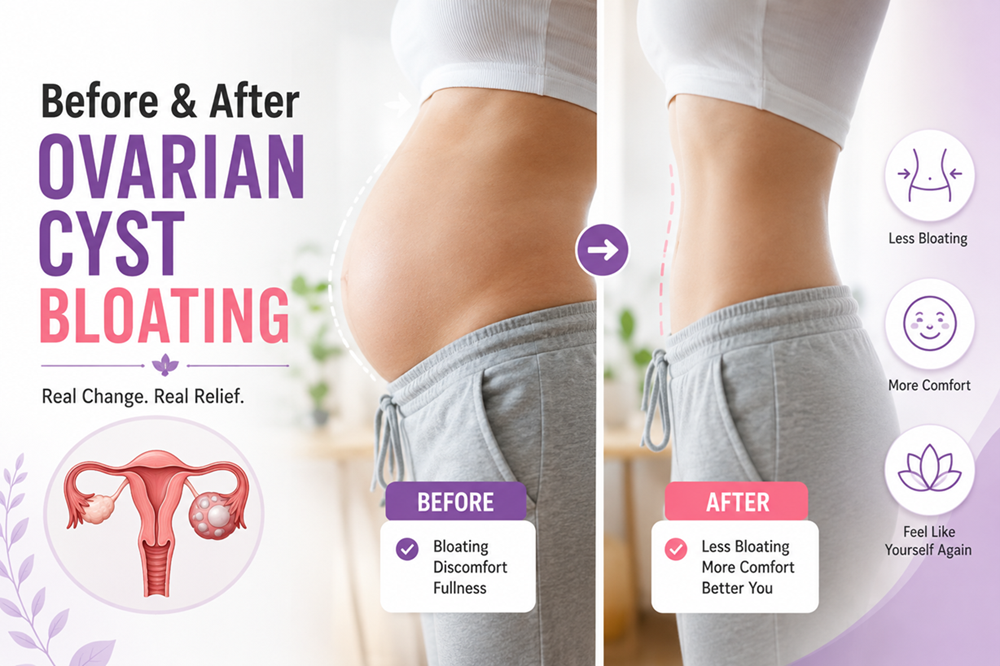
Ovarian cyst bloating can be confusing because it may look like ordinary digestive bloating, period-related water retention, or a temporary change in abdominal shape. People searching for before and after ovarian cyst bloating examples may notice that the lower abdomen appears fuller before the cyst resolves or is treated. Some people experience fullness that seems more pronounced on one side, while others mainly feel pressure, tight clothing, early fullness after eating, urinary frequency, or pelvic heaviness without a dramatic visual change.
The “before and after” experience is also not the same for everyone. A small functional cyst may disappear on its own and the bloating may gradually fade. A larger cyst may continue to cause pressure until it shrinks or is removed. After laparoscopic surgery, the original cyst-related fullness may improve, but temporary postoperative swelling, constipation, and residual surgical gas can make the abdomen look more bloated at first.
That means a flatter stomach the next morning is not the best way to judge whether a cyst has resolved. Symptoms, pelvic examination, and follow-up imaging when recommended are more reliable than appearance alone.
Key Takeaways
- Ovarian cysts can cause pressure, bloating, swelling, or pain in the lower abdomen, especially when a cyst is large enough to press on nearby structures.
- Before treatment or resolution, bloating may feel like pelvic fullness, heaviness, one-sided pressure, tighter waistbands, early satiety, urinary frequency, or constipation.
- After a functional cyst resolves, bloating may improve gradually rather than disappearing instantly.
- After ovarian cyst surgery, temporary abdominal swelling can persist because of inflammation, constipation, reduced activity, and the gas used during laparoscopy.
- Sudden severe pelvic pain, pain with nausea or vomiting, faintness, weakness, or signs of internal bleeding can point to rupture or ovarian torsion and need urgent care.
- New, frequent, or persistent bloating should not automatically be blamed on a known cyst. Other gynecologic and gastrointestinal causes may need evaluation.
What Does Ovarian Cyst Bloating Feel Like Before Treatment?
When an ovarian cyst causes bloating, the sensation often starts lower in the abdomen or pelvis rather than as generalized gas throughout the entire belly. A larger cyst can occupy space in the pelvis and press on the bladder, bowel, uterus, or abdominal wall. That pressure can create a sense of fullness even if the amount of visible swelling is modest.
Some people describe the abdomen as feeling unusually firm or heavy at the end of the day. Clothing may feel tighter at the waist. If the cyst is mostly on one side, discomfort or fullness may also feel more noticeable on that side, although visible asymmetry is not a reliable diagnostic sign.
Bloating can also fluctuate with the menstrual cycle. Ovulation, premenstrual hormone changes, constipation, diet, and fluid retention may overlap with cyst symptoms. This is why a single photograph or one day’s abdominal size cannot tell you whether the cyst is growing or shrinking.
What Can the “Before” Picture Include Besides Bloating?
A symptomatic ovarian cyst can produce a cluster of symptoms rather than bloating alone. Depending on the cyst and its size, you may notice:
- A dull or aching pelvic pain that comes and goes.
- A feeling of pressure, fullness, or heaviness in the lower abdomen.
- Pain that seems stronger on one side.
- Pain during sex or certain movements.
- A need to urinate more often because of bladder pressure.
- Constipation or discomfort with bowel movements.
- Feeling full sooner than expected when eating.
- Changes in menstrual bleeding or pelvic discomfort around the cycle.
The U.S. Office on Women’s Health lists pressure, bloating, swelling, and lower-abdominal pain among possible ovarian cyst symptoms. See its ovarian cyst overview for additional patient information.
What Does Ovarian Cyst Bloating Look Like After the Cyst Resolves?
If the cyst itself was driving the abdominal pressure, the lower-belly fullness should generally lessen as the cyst shrinks or disappears. The change can be subtle. You may first notice that your waistband feels less tight, pelvic heaviness is reduced, bowel or bladder pressure is easier, or you no longer feel as full after small meals.
The improvement is not always immediate because bloating may have more than one cause. Constipation, premenstrual fluid retention, irritable bowel symptoms, endometriosis, fibroids, or diet-related gas can continue even after an ovarian cyst has resolved.
For functional cysts, clinicians often use watchful waiting because many resolve on their own. If follow-up ultrasound was recommended, that scan is a more meaningful “after” check than the appearance of the abdomen.
Before vs. After: What Changes Are Realistic?
| What you notice | Before the cyst resolves or is treated | After improvement or resolution |
| Lower-abdominal fullness | May feel persistent, heavy, or more noticeable on one side. | Often decreases if the cyst was the main cause. |
| Waistband tightness | Clothes may feel tighter even without major weight gain. | May improve gradually as pelvic pressure decreases. |
| Pelvic pressure | Can feel dull, heavy, or uncomfortable with movement. | Should ease if the cyst shrinks or is removed successfully. |
| Urinary or bowel pressure | Larger cysts can press on nearby organs. | May improve as pressure on the bladder or bowel decreases. |
| Visible belly size | May look more rounded, but appearance varies widely. | Can look flatter, though digestive bloating or postoperative swelling may mask the change. |
| Pain | May be dull, intermittent, or one-sided. | Often improves, but new severe pain is not a normal “after” change and needs assessment. |
How Long Does Ovarian Cyst Bloating Take to Go Away?
There is no single timeline because the answer depends on why the bloating is happening. A functional cyst that is naturally resolving may produce symptoms that fade over the course of several weeks or menstrual cycles. Larger, persistent, endometriosis-related, dermoid, or other nonfunctional cysts may not follow the same pattern.
If a clinician recommends watchful waiting, repeat pelvic ultrasound may be used to check whether the cyst is shrinking, stable, or changing. Treatment decisions are based on factors such as your age, menopausal status, symptoms, cyst size, and ultrasound appearance.
If bloating remains unchanged even after imaging confirms that the cyst is gone, it is worth looking for another explanation rather than assuming the ovary is still the problem.
MedlinePlus provides a current U.S. overview of ovarian cyst symptoms, diagnosis, and treatment, including the role of ultrasound and the warning signs of complications.
Why Can You Look More Bloated Right After Ovarian Cyst Surgery?
This is one of the most important “before and after” surprises. Removing a cyst does not guarantee an instantly flatter abdomen. During laparoscopy, the abdomen is inflated with carbon dioxide gas so the surgeon can see and work safely. Some residual gas and tissue irritation can contribute to temporary abdominal discomfort and a swollen feeling after surgery.
Postoperative constipation can add to the problem. Anesthesia, pain medicines, reduced movement, changes in eating, and dehydration can slow the bowel. Surgical inflammation around the pelvis can also make the lower abdomen feel tender or puffy while tissues heal.
In other words, early postoperative bloating does not necessarily mean the cyst is still there or has returned. The trend matters. Swelling and discomfort should generally improve as recovery progresses, following the instructions given by the surgical team.
What Is Normal After Laparoscopic Cyst Removal?
Your surgeon’s instructions take priority, but commonly expected early recovery symptoms can include:
- Abdominal soreness around the incisions.
- A temporary swollen or gassy feeling.
- Shoulder discomfort related to residual carbon dioxide gas.
- Fatigue and reduced appetite for a short period.
- Constipation or slower bowel movements.
- Mild pelvic discomfort that gradually improves.
Call your surgical team if pain or swelling is worsening rather than improving, or if you develop fever, repeated vomiting, heavy bleeding, increasing redness or drainage from an incision, shortness of breath, fainting, or other symptoms your discharge instructions identify as urgent.
Does a Ruptured Ovarian Cyst Make the Bloating Go Away?
Not necessarily. A cyst can rupture and release fluid into the pelvis, but that does not guarantee immediate relief. A rupture can cause sudden pain, and bleeding from a hemorrhagic cyst can sometimes irritate the abdominal lining or lead to internal bleeding.
Some ruptured cysts are uncomplicated and can be managed with observation and pain control after evaluation. Others require urgent treatment. The severity of pain, vital signs, amount of bleeding, pregnancy status, and imaging findings all affect what happens next.
Do not use a sudden decrease in bloating as proof that a cyst ruptured safely. A rupture that causes significant bleeding can be dangerous even if the abdominal shape does not look dramatically different.
When Could Bloating Mean Ovarian Torsion Instead?
Ovarian torsion happens when an ovary twists around the tissues that support it, which can reduce or cut off its blood supply. An enlarged ovary or ovarian mass can increase the risk. Torsion usually causes significant pelvic or lower-abdominal pain, often with nausea or vomiting.
Torsion is a medical emergency because delayed treatment can damage the ovary. If you have sudden severe one-sided pelvic pain, especially with nausea or vomiting, seek urgent medical evaluation rather than waiting to see whether the bloating improves.
Can You Tell the Size of an Ovarian Cyst by How Bloated You Look?
No. Visible abdominal size is a poor way to estimate cyst size. Body shape, bowel contents, constipation, abdominal muscle tone, menstrual-cycle fluid retention, and the cyst’s position can all change how the abdomen looks.
A relatively large cyst may cause pressure without a dramatic visual difference, while ordinary gastrointestinal bloating can make the abdomen look much larger without any ovarian mass. Pelvic ultrasound is the standard tool used to characterize many ovarian cysts because it can show the cyst’s size, location, and whether it appears fluid-filled or more complex.
What If the Bloating Is Constant Instead of Coming and Going?
Persistent bloating deserves attention, especially when it is new, frequent, or progressively worsening. It may still be related to a benign ovarian cyst, but clinicians also consider gastrointestinal conditions, constipation, fibroids, endometriosis, pregnancy, urinary problems, liver disease, fluid buildup, and other pelvic masses.
Ovarian cancer is much less common than benign causes of bloating, but persistent abdominal enlargement or bloating is one of the symptoms clinicians do not want to ignore, particularly when it occurs with pelvic or abdominal pain, difficulty eating, feeling full quickly, or urinary urgency or frequency.
Having those symptoms does not mean you have ovarian cancer. The point is that a known cyst should not become a reason to dismiss a new or changing symptom pattern.
The American College of Obstetricians and Gynecologists explains the symptom pattern that warrants evaluation in its ovarian cancer patient FAQ.
How Do Doctors Confirm Whether the Cyst Is Actually Gone?
When follow-up is needed, pelvic ultrasound is usually the most useful way to see whether a cyst has resolved, decreased in size, stayed the same, or developed features that need closer evaluation. A transvaginal ultrasound may provide detailed views of the ovaries, although the exact imaging approach depends on the patient and clinical situation.
Not every cyst requires repeat imaging. Very small, simple cysts in people who are still ovulating are often physiologic and may not need treatment. A larger cyst, persistent symptoms, a complex appearance, pregnancy, or postmenopausal status can change the follow-up plan.
Blood tests such as CA-125 are not routine home-style “cyst tests” and are not used to diagnose every ovarian cyst. They may be considered in selected situations when the overall picture raises concern for malignancy, especially after menopause or when imaging is suspicious.
What Can You Do for Bloating While an Ovarian Cyst Is Being Monitored?
Self-care cannot shrink most existing ovarian cysts on demand, but it can make overlapping digestive or pelvic discomfort easier to manage while you follow your clinician’s plan.
- Track when the bloating occurs in relation to your menstrual cycle.
- Note whether constipation, certain foods, large meals, or carbonated drinks make the swelling worse.
- Stay hydrated and maintain gentle activity if your clinician says it is safe.
- Use pain medicines only as directed and check with a clinician if you have kidney disease, ulcers, take blood thinners, are pregnant, or have other reasons certain pain relievers may be unsafe.
- Avoid repeatedly pressing on the abdomen to judge cyst size.
- Keep follow-up imaging or gynecology appointments even if symptoms improve.
Should Hormonal Birth Control Make Existing Cyst Bloating Disappear?
Hormonal contraceptives can reduce ovulation and may help prevent some new functional cysts from forming, but they do not reliably shrink an ovarian cyst that already exists. If your bloating improves after starting hormonal birth control, several things may be contributing, including cycle suppression, less menstrual fluid retention, or the cyst resolving on its own.
The best treatment depends on what type of cyst is present. Do not start or stop hormonal medication solely to treat bloating without discussing your history and goals with a clinician.
When Is Surgery Considered for an Ovarian Cyst?
Surgery is not necessary for every ovarian cyst. It may be recommended when a cyst is large, persistent, growing, causing significant pain or pressure, has concerning ultrasound features, or creates concern for a complication such as torsion. Age and menopausal status also influence decision-making.
When possible, surgeons may remove only the cyst and preserve the ovary, a procedure called cystectomy. In other situations, removal of the affected ovary may be necessary. The surgical approach can be minimally invasive or open depending on the cyst’s size, appearance, and the level of concern for cancer.
When Should You Seek Urgent Care for Ovarian Cyst Symptoms?
Seek urgent medical care for symptoms that could signal torsion, significant rupture, internal bleeding, or another acute abdominal problem, including:
- Sudden severe pelvic or lower-abdominal pain.
- Severe pain with nausea or repeated vomiting.
- Fainting, marked weakness, dizziness, or feeling unusually lightheaded.
- Rapidly worsening abdominal pain or swelling.
- Heavy vaginal bleeding with severe pain or weakness.
- Fever with significant pelvic pain.
- A rigid or very tender abdomen.
If you are pregnant or could be pregnant, sudden pelvic pain also needs prompt assessment because ectopic pregnancy and other pregnancy-related emergencies can cause overlapping symptoms.
Questions People Often Ask About Ovarian Cyst Bloating
Can an ovarian cyst make you look pregnant?
A large cyst can increase lower-abdominal fullness enough to change the way clothing fits or make the belly appear more rounded. However, many other conditions can create the same appearance, so abdominal shape cannot establish the diagnosis.
Can a small ovarian cyst cause major bloating?
It is possible to have discomfort with a relatively small cyst, but severe or generalized bloating should not automatically be attributed to cyst size. Digestive bloating, constipation, menstrual fluid retention, and other pelvic conditions may be contributing.
Will losing weight get rid of ovarian cyst bloating?
Weight loss is not a treatment for an existing ovarian cyst. If a cyst is the cause of pressure or swelling, improvement depends on the cyst resolving or being appropriately treated. Unintended weight loss combined with persistent bloating should be evaluated.
Can ovarian cyst bloating come and go?
Yes. Symptoms can fluctuate, especially when digestive factors and the menstrual cycle overlap. Some people notice more pressure around certain points in the cycle, while others have more constant fullness from a larger cyst.
Why am I still bloated after my cyst was removed?
Early after surgery, inflammation, residual laparoscopic gas, constipation, and reduced activity can temporarily keep the abdomen swollen. If bloating is persistent, worsening, or accompanied by fever, vomiting, severe pain, or other concerning symptoms, contact the surgical team.
Can ovarian cysts cause weight gain?
An ovarian cyst can increase abdominal size or create a sensation of weight and fullness, but ordinary functional cysts are not usually a cause of substantial body-fat gain. A very large mass or fluid accumulation can affect body weight, which requires medical evaluation.
Does a flat stomach mean the cyst is gone?
No. Symptoms and appearance can improve even while a cyst remains, and a cyst can resolve without causing a dramatic visual change. Imaging is more reliable when confirmation is clinically necessary.
The Bottom Line
Before ovarian cyst bloating improves, you may notice lower-abdominal fullness, pelvic pressure, tighter clothing, urinary or bowel pressure, or one-sided discomfort. After the cyst shrinks or resolves, those pressure-related symptoms may gradually ease. If the cyst is surgically removed, the immediate “after” period can temporarily look more bloated because the body is recovering from the procedure.
The most useful comparison is not a before-and-after photo. It is the trend in symptoms plus follow-up imaging when your clinician recommends it. Persistent bloating, new early fullness, worsening pelvic pain, or urinary changes deserve evaluation even when an ovarian cyst has already been diagnosed.
Editorial Note
This article is for general educational purposes and does not diagnose an ovarian cyst or replace care from a licensed health professional. It was prepared for a U.S. audience using 2026-accessible guidance from major U.S. women’s health and medical sources.